
ChatGPT
ExecutionDaily driver for drafting, planning, and turning vague ideas into something usable.
AI stack
This is not a list of AI tabs. It is the working setup behind how I research, think, write, and ship. Each tool has a role, so things stay intentional instead of scattered.
ChatGPT
 Claude
 Perplexity
 NotebookLM
 Copilot
 Gemini
 Gamma
Gamma
 OpenClaw
Every AI tool is good at something and mediocre at a lot of other things. ChatGPT is fast but shallow on reflection. Claude is thoughtful but slower to iterate with. Perplexity finds sources but does not help you write. The moment you stop expecting one tool to do everything, your output gets better.
A stack is not about having more tools. It is about giving each tool the job it is actually good at, then connecting them into something that feels like a workflow instead of a guessing game.
The tools
Daily driver for drafting, planning, and turning vague ideas into something usable.
When I need deeper thinking, more nuance, or calmer long-form writing.
Fast, source-backed answers when I need orientation or quick validation.
Working with my own notes and documents so ideas stay connected to sources.
The AI layer that fits naturally when I am already inside Microsoft 365.
Multimodal work and tasks that benefit from the Google ecosystem.
Converting ideas into decks, visual stories, and shareable structure.
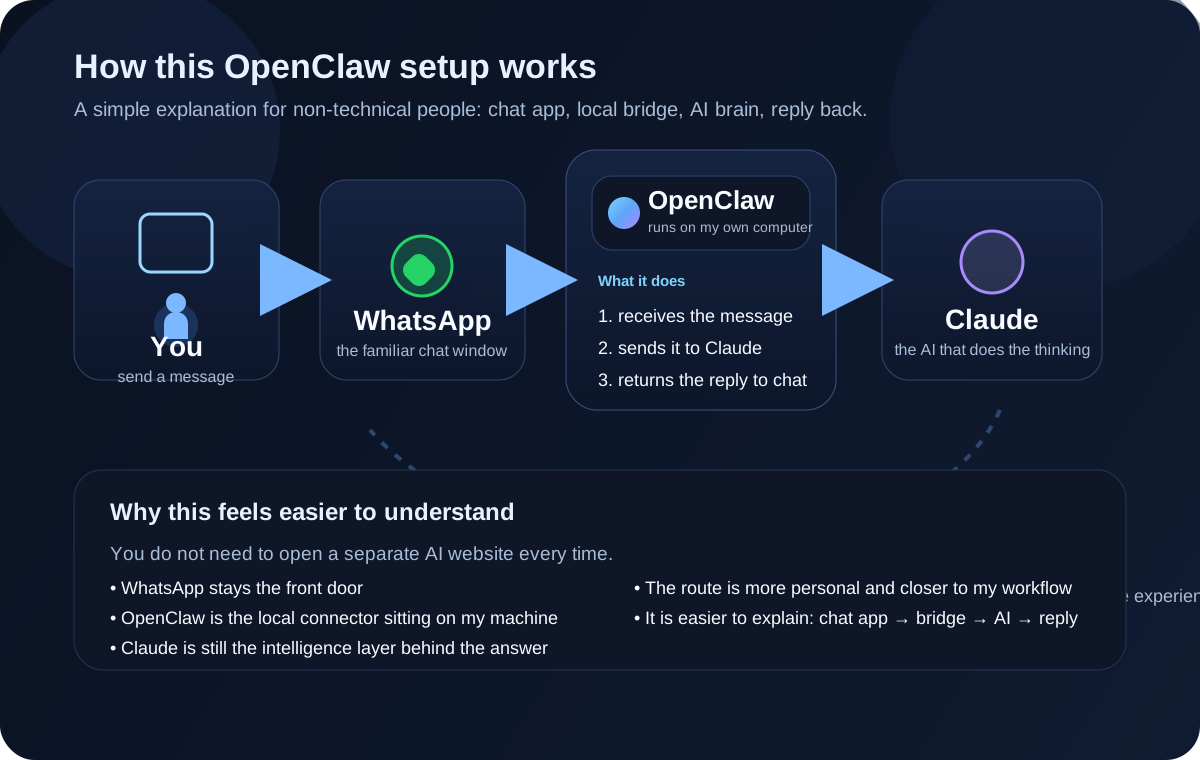
My always-on assistant, running locally and reachable via WhatsApp.
How they connect
Perplexity for orientation. NotebookLM if I have my own material to work through.
Claude for depth and framing. ChatGPT for speed and iteration.
Copilot inside Microsoft. Gemini for Google-native tasks. OpenClaw for local routing.
Gamma for presentations. ChatGPT for final polish and shareable output.
The build stack
The tools above are how I think. The tools below are how I ship. When the Convergence Profile went from concept to working web app, it needed a completely different layer — not for research or writing, but for building, deploying, and running a product.

The engine room. Command-line AI that writes, edits, and iterates on actual code. Where the Convergence Profile app got built.

Where specs, brand frameworks, and build plans take shape. The thinking that happens before a single line of code gets written.

Push code, get a live URL. Hosting and deployment that makes going from localhost to production feel almost suspiciously easy.

API keys, usage monitoring, cost tracking. When your product runs on AI conversations, this is the dashboard you check every morning.

Transactional email for the feedback form and newsletter. Simple setup, no enterprise email service headaches.

Account connections and identity setup. OAuth configuration and credential management for the authentication flow.
Cowork and Claude Desktop for specs, frameworks, and stress-testing ideas.
Claude Code for writing the app. Iterate fast, fix what breaks.
Resend for email, Google Cloud for auth. The infrastructure layer.
Vercel to deploy. Anthropic Console to watch costs and usage.
Local setup
OpenClaw runs on my own machine. It connects WhatsApp to Claude, so I can message my AI setup from anywhere without opening a website. It sounds small, but the shift from "visiting a tool" to "messaging your own system" changes how you use AI entirely.
The AI workflow guide explains each tool, when I use it, and why. Practical, not theoretical.